

 MICHIGAN, UNITED STATES | TUNGARU PRESS | October 26, 2026
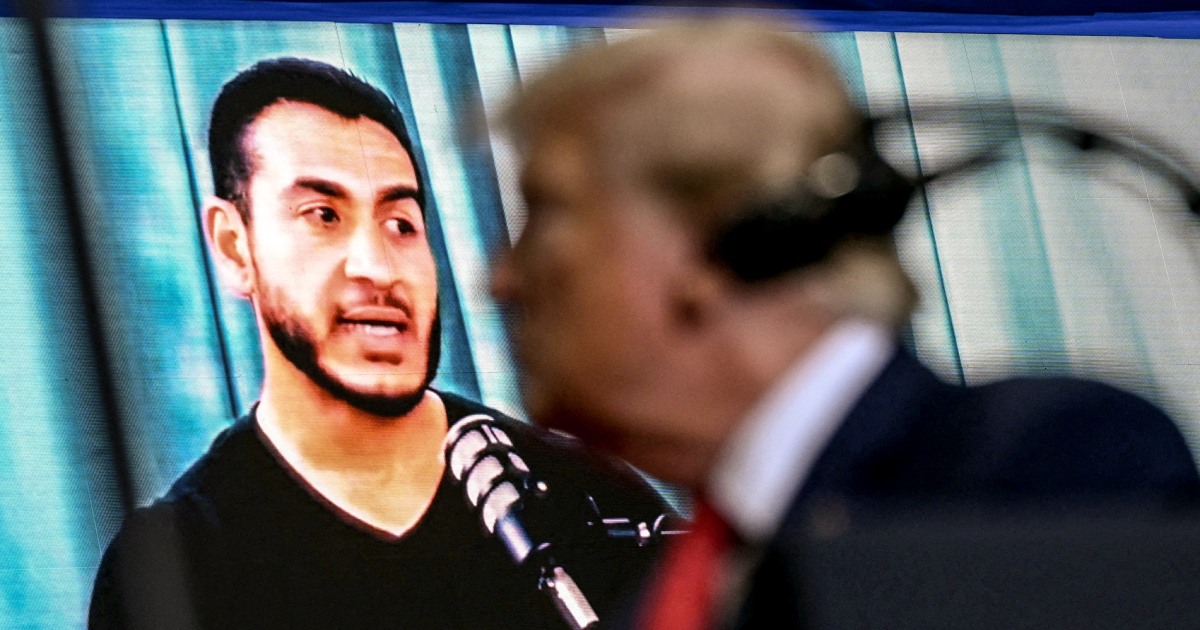
US President Donald Trump has intensified his attacks on Democratic Senate candidate Abdul El-Sayed, making remarks about his Muslim faith and questioning his loyalty to the United States during a campaign rally in Michigan.
The comments, delivered in Port Huron on Sunday, October 25, drew criticism from political opponents and a former Arab American supporter of Trump, who described the president's statements as racist.
The controversy comes as El-Sayed faces Republican candidate Mike Rogers in a closely contested Senate race that could help determine which party controls the chamber after the November 3 midterm elections.
Trump Accuses El-Sayed of Supporting Extremism
During the rally, Trump described El-Sayed, a former Detroit public health official, as a “jihadist” and claimed he was “on the side of the terrorists.”
The president also suggested that El-Sayed would “have to go through a metal detector before he's allowed to go into the Senate.”
Trump repeatedly referred to the September 11, 2001, terrorist attacks while arguing against El-Sayed's election.
At one point, he told supporters that he had come to Michigan “to keep a jihadist Muslim Brotherhood member from becoming a United States senator.”
There is no evidence that El-Sayed is affiliated with the Muslim Brotherhood or any extremist organisation. El-Sayed has repeatedly rejected allegations questioning his loyalty to the United States.
If elected, he would become the first Muslim to serve in the US Senate.
El-Sayed Responds to Trump's Remarks
Speaking at a campaign rally in Grand Rapids later on Sunday, El-Sayed dismissed Trump's repeated attacks on his name and identity.
“I don't even care that he remembers my whole name because he can just go on and call me 'senator' after November,” El-Sayed told cheering supporters.
“I will be Senator Muhammad to you, bro.”
El-Sayed, who was born in the United States to Egyptian immigrant parents, has defended his right to practise his religion without having his patriotism questioned.
During a previous debate with Rogers, the Democratic candidate said he was proud of the constitutional protections guaranteeing religious freedom.
“I'm proud of our Constitution that guarantees all of us the right to pray as we choose to pray,” El-Sayed said.
Former Trump Ally Condemns Comments as Racist
Trump's remarks drew a particularly strong response from Bishara Bahbah, a founder of Arab Americans for Trump, an organisation that helped the president reach Arab American voters during the 2024 election.
The group has since changed its name to Arab Americans for Peace.
Bahbah said Trump's statements crossed an unacceptable line.
“The president's statements are out of line,” Bahbah said in a telephone interview.
“They are crossing a red line. They are racist.”
He argued that the comments were offensive not only to Muslim Americans but also to Arab Americans of other religious backgrounds.
“The president of the United States saying that about a person because of his religion, that is just not acceptable,” Bahbah said.
“And people are going to remember that on Nov. 3.”
His criticism is politically significant because Trump made gains among Arab American voters in Michigan during the 2024 presidential election.
Trump became the first Republican presidential candidate since 2000 to win Dearborn, a city with a large Arab American population.
Sanders Accuses Republicans of Promoting Division
Independent Senator Bernie Sanders, who appeared at El-Sayed's Grand Rapids rally, accused Trump and his allies of using anti-Muslim rhetoric to distract voters from economic concerns.
Sanders argued that Republicans were failing to address issues affecting working families, including healthcare costs, housing and income inequality.
“All they can do is foment hatred and divisiveness,” Sanders said.
The exchange comes as Republicans face criticism over inflation, rising fuel prices and the ongoing war involving Iran.
Democrats have sought to keep attention on economic pressures, while Republicans have increasingly focused their campaign messaging on national security and El-Sayed's political associations.
Republican Rival Questions El-Sayed's Loyalty
Republican Senate candidate Mike Rogers has also questioned El-Sayed's political associations and loyalty to the United States.
During the candidates' second and final debate, Rogers asked:
“Are you for America, or are you for these terrorist groups overseas?”
El-Sayed called the question “shameful.”
Rogers repeated allegations involving the Muslim Brotherhood during Sunday's campaign event.
“The Muslim Brotherhood celebrated exactly one victory in the United States in the primary this year,” Rogers said.
“Abdul El-Sayed's.”
The allegations have become a central feature of the Republican campaign, although no evidence has been presented establishing that El-Sayed belongs to the organisation.
Past Statements and Political Associations Draw Scrutiny
El-Sayed has faced criticism over his association with political streamer Hasan Piker, who appeared alongside him during the Democratic primary campaign.
Piker has previously made controversial statements about Israel, Hamas and the September 11 attacks.
El-Sayed has also faced questions about his own public comments.
Following an attack on a synagogue in the Detroit area earlier this year, El-Sayed used the phrase “hurt people hurt people,” prompting criticism that he was appearing to excuse the violence.
He later apologised and said that was not his intention.
“To anyone who feels like my comments might have been hurtful, I'm really sorry,” El-Sayed said.
“That was not my intention.”
The controversy has added to an already tense Senate campaign, with both candidates facing scrutiny over their statements and political positions.
Michigan Senate Race Could Decide Control of Congress
The contest between El-Sayed and Rogers is one of several closely watched Senate races ahead of the November 3 elections.
The winner will replace retiring Democratic Senator Gary Peters.
Michigan is considered politically important because of its competitive electorate, manufacturing economy and diverse communities.
Trump's rally in Port Huron was intended to strengthen Republican support in the final days before voting.
Rapper Nicki Minaj also appeared at the event, encouraging supporters to vote for Republican candidates.
However, the president's comments about El-Sayed dominated much of the political reaction.
Religious Freedom Becomes a Campaign Issue
The dispute has placed religious identity and freedom of belief at the centre of Michigan's Senate race.
Trump and Rogers have framed their criticism of El-Sayed around national security, while El-Sayed and his supporters argue that the attacks unfairly target his Muslim faith.
The criticism from Bahbah also highlights tensions between Trump and some Arab American voters who previously supported him.
With Election Day approaching, both campaigns are seeking to mobilise supporters in a race with national consequences.
The outcome will help determine the balance of power in the US Senate, while the controversy surrounding El-Sayed has raised broader questions about religious tolerance and the boundaries of political campaigning in America.
Original reporting: The Associated Press, published by NPR on October 26, 2026.
Source: Associated Press.
Tungaru Press | Local Voices, Global Stories.