 SEOUL, SOUTH KOREA | TUNGARU PRESS | October 26, 2026
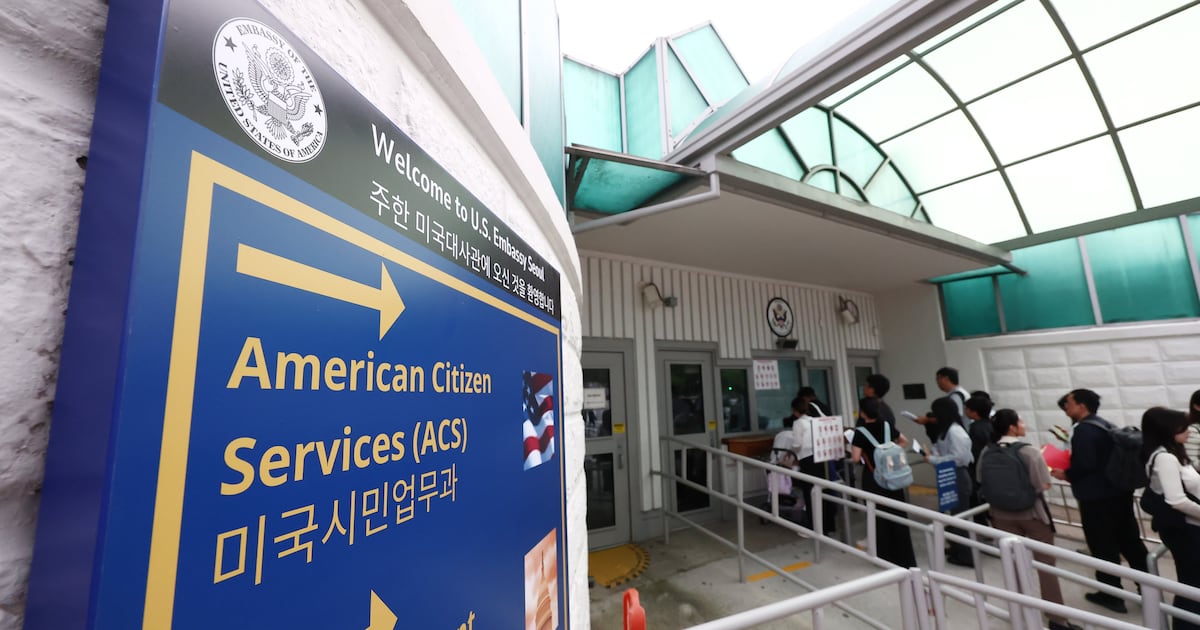
Nearly one in four South Korean applicants seeking visitor visas to the United States were refused in fiscal year 2025, marking the highest rejection rate recorded since comparable figures became available in 2020.
According to figures submitted by South Korea's Ministry of Foreign Affairs to opposition lawmaker Kim Dai-sik, the adjusted refusal rate for US business and tourist visas reached 24.73 percent, up from 14.97 percent the previous year.
The increase of 9.76 percentage points has raised concerns among South Korean lawmakers about stricter American immigration screening and the state of diplomatic relations between the two countries.
Visa Refusals Reach Record Level
The figures cover B1 visas, issued for short-term business travel, and B2 visas, used for tourism and other temporary visits.
The adjusted refusal rate excludes applicants who were initially rejected but later received visas after providing additional documentation.
South Korea's refusal rate has fluctuated over recent years, rising from 8.46 percent in 2020 to 18.03 percent in 2021 before falling to 14.44 percent in 2023.
It increased slightly to 14.97 percent in 2024 before climbing sharply in fiscal 2025, which ran from October 2024 through September 2025.
The latest figure is considerably higher than the rates recorded for several other major US allies.
Japan reported a refusal rate of 5.68 percent, while Germany recorded 12.22 percent and France 9.67 percent.
Britain's rate stood at 20.44 percent.
China, which does not participate in the US Visa Waiver Program, recorded a refusal rate of 20.21 percent, down from 25.37 percent the previous year.
India and Vietnam also reported lower rates than South Korea, at 22.04 percent and 22.08 percent respectively.
Foreign Ministry Points to Tougher Screening
South Korea's Foreign Ministry said the exact reasons behind the increase remain unclear because US authorities do not publicly disclose detailed explanations for individual visa refusals.
“The United States does not disclose detailed reasons for visa refusals, which makes it difficult to determine exactly why the rate rose,” the ministry told Kim Dai-sik's office.
Officials suggested that stricter immigration policies may have contributed to the increase.
“We presume that tighter visa screening policies may have had an impact as immigration has become an increasingly contentious domestic political issue in the United States,” the ministry said.
However, the ministry did not identify a specific US policy responsible for the rise.
Concerns Over Treatment of Korean Workers
The figures have renewed attention on the treatment of South Korean business personnel travelling to the United States.
In September 2025, US immigration authorities detained more than 300 South Korean workers during an enforcement operation at a battery plant construction site in Georgia.
The project involved South Korean companies Hyundai Motor and LG Energy Solution.
The incident raised questions about visa requirements for workers involved in major overseas investment projects.
Some South Korean observers have suggested that increased scrutiny of corporate personnel may be connected to the broader rise in visa refusals.
However, no direct link has been established between the Georgia operation and the national refusal rate.
Lawmakers Question State of US-Korea Relations
The sharp increase has also become a political issue in South Korea, with opposition lawmakers questioning whether tensions between Seoul and Washington have affected visa decisions.
Concerns have focused on tariff negotiations, security cooperation and disagreements involving American businesses operating in South Korea.
People Power Party lawmaker Na Kyung-won criticised the government's handling of relations with Washington.
In an October 15 Facebook post, Na pointed to reports of visa difficulties involving senior South Korean political figures.
She called on President Lee Jae Myung's administration to take steps to restore confidence between the two allies.
“The causes of restrictions on intelligence sharing must be addressed, and trust in information protection and high-level communication must be restored,” Na said.
Her remarks followed reports that Democratic Party lawmaker Jung Chung-rae was unable to obtain a US visa for a parliamentary inspection visit.
Jung reportedly had to change his assignment from a delegation visiting the Americas to one travelling to Europe.
The circumstances surrounding his visa application were not fully explained in the report.
Independent Lawmaker Warns Problem Could Worsen
Independent lawmaker Han Dong-hoon also urged the government to address the issue.
“One in four visitor visas rejected. The Lee Jae Myung administration cannot 'avoid' the problem and expect it to be 'resolved,'” Han wrote on Facebook on Monday.
“It will only 'worsen.'”
His comments reflected growing political pressure on the government to seek clarification from Washington about the increase in refusals.
However, suggestions that the figures are connected to diplomatic disagreements remain unconfirmed.
What the Figures Mean for Travellers
The higher refusal rate could create uncertainty for South Koreans applying for US visitor visas, particularly those travelling for business or tourism.
South Korea participates in the US Visa Waiver Program, which allows eligible travellers to visit the United States without obtaining a traditional visitor visa, subject to approval through the Electronic System for Travel Authorization (ESTA).
The reported refusal rate applies to B1 and B2 visa applicants, not to all South Korean travellers or ESTA applications.
The distinction is important because many South Korean visitors enter the United States through the visa waiver system.
Nevertheless, the sharp increase in visa refusals has prompted questions about US screening practices and whether South Korean applicants are facing greater scrutiny.
For now, Seoul has acknowledged the increase but has not established a definitive explanation.
With nearly one in four visitor visa applications refused, South Korean lawmakers are pressing for greater clarity and renewed diplomatic engagement with Washington.
Original reporting: Korea JoongAng Daily, October 26, 2026.
Source: South Korean Ministry of Foreign Affairs data and statements reported by Korea JoongAng Daily.
Adapted and rewritten for Tungaru Press. Direct quotes translated or reproduced from the source reporting.
Tungaru Press | Local Voices, Global Stories.