

BELGRADE, SERBIA | TUNGARU PRESS | October 26, 2026
Serbia's longtime political leader Aleksandar Vucic has conceded defeat in the country's snap parliamentary election, with a student-led opposition movement projected to win a majority after nearly two years of nationwide protests against corruption and government accountability.
The announcement on Sunday, October 25, sparked celebrations across Serbia, with thousands of people taking to the streets of Belgrade and other cities to welcome what supporters described as a historic political change.
The election marks a major setback for Vucic's Serbian Progressive Party (SNS), which has dominated the country's politics since 2012.
Vucic Acknowledges Election Defeat
Speaking after voting ended on Sunday, Vucic acknowledged that his political movement had lost its parliamentary majority.
“It is clear that we have lost these elections,” Vucic said.
According to preliminary projections cited by Vucic, the opposition Student List was expected to secure between 135 and 140 seats in Serbia's 250-member parliament.
His electoral list was projected to win approximately 105 seats.
A party or coalition needs at least 126 seats to hold a parliamentary majority.
Although official results had not yet been finalised, the projections indicated that the student-backed movement was on course to form the next government.
Vucic, who resigned as president in September to run for prime minister, had campaigned on promises of higher pensions, increased public-sector wages and further economic investment.
Student Movement Celebrates Historic Victory
The announcement triggered emotional scenes at the Student List's election headquarters, where supporters celebrated with cheers and tears.
Radomir Saicic, a parliamentary candidate representing the movement, said early results showed strong support for the student-backed candidates.
“Preliminary results show that students are convincingly leading in almost all polling stations,” Saicic said.
He described the election as a turning point for the country.
“Students won, and with them also a hope that Serbia can be a country of justice, freedom and dignity,” he added.
“Let this night be the beginning of a new chapter.”
The Student List, also known as Students Win, emerged from mass demonstrations demanding political accountability and stronger democratic institutions.
Its candidates include professionals from fields such as medicine and education, with many entering national politics for the first time.
Celebrations Erupt Across Serbia
Thousands of people gathered in Belgrade following Vucic's concession, waving flags, singing protest songs and celebrating in the streets.
Fireworks lit up the sky as supporters drove through the capital, sounding their car horns.
Crowds chanted “Aleksandar is gone” as news of the projected result spread.
Celebrations were also reported in Novi Sad, where the student protest movement first gained national attention.
For many supporters, the election represented an opportunity to move away from years of political division.
“It means freedom from a dictatorship that has lasted for 12 years, that I cannot remember a time before,” voter Jana Vasic told Al Jazeera.
She said the movement's supporters understood that winning the election was only the beginning.
“I'm not completely sure what our candidates will do first, but I think first for tonight, we'll celebrate. And then tomorrow, the real hard work starts.”
Belgrade resident Dragana Kovecevic also welcomed the result.
“We are all too happy; finally, we are becoming one normal and free country,” she told the Associated Press.
Nearly Two Years of Protests Lead to Political Change
The student-led movement began following a deadly railway station canopy collapse in Novi Sad in November 2024.
The disaster killed 16 people and sparked public anger over construction standards, government oversight and allegations of corruption.
What began as demonstrations demanding accountability for the tragedy developed into a nationwide protest movement.
Students organised marches, demonstrations and public gatherings, calling for stronger institutions, greater transparency and an end to political corruption.
Vucic and the Serbian Progressive Party have denied accusations of wrongdoing.
However, the movement continued to gain support, eventually developing into a political force capable of challenging the country's ruling party.
Several established opposition groups supported the student-backed candidates rather than competing against them.
Record Voter Turnout Reported
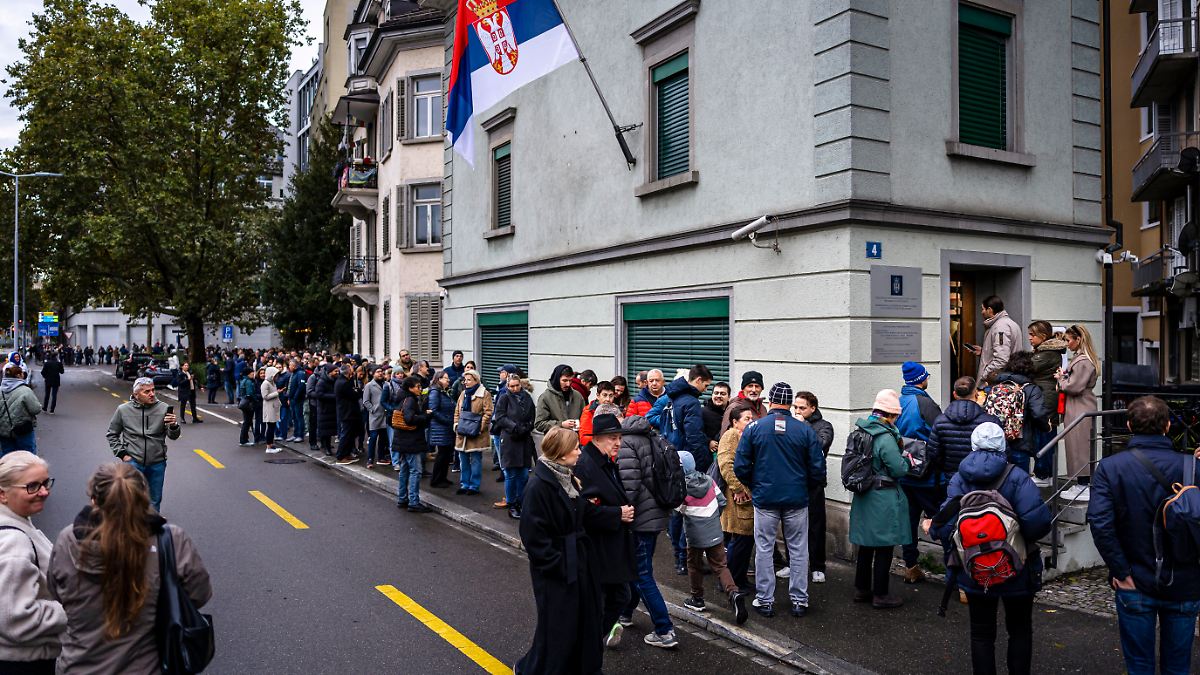
Sunday's election attracted unusually high voter participation.
According to Serbia's State Election Commission, turnout had reached 64.9 percent by 6pm local time, two hours before polling stations closed.
The figure was reported as the highest voter participation since the breakup of Yugoslavia in 1992.
Approximately 6.5 million people were eligible to vote, with 18 electoral lists competing for parliamentary seats.
The high turnout was seen as an important factor in the student movement's electoral performance.
Election Watchdogs Report Irregularities
Despite the celebrations, independent monitoring organisations reported concerns about the voting process.
The Centre for Research, Transparency and Accountability (CRTA) said its observers recorded pressure on voters or election workers at almost one-third of the 500 polling stations monitored.
The organisation also reported concerns about ballot secrecy.
Another monitoring group, the Centre for Free Elections and Democracy (CeSID), received approximately 260 reports of possible irregularities by late afternoon.
These included allegations of ballot photography, group voting and problems with voter identification checks.
Police were deployed near the election commission's headquarters in Belgrade, while prosecutors urged political groups and supporters to avoid violence.
The reported irregularities have raised questions about the conduct of the election, although the full extent of any impact on the results had not been established.
European Union Welcomes Student-Led Victory
European Commission President Ursula von der Leyen congratulated the Student List following the announcement of its projected victory.
In a statement posted on X, she expressed the European Union's willingness to work with Serbia's incoming leadership.
“We stand ready to support reforms on the rule of law, media freedom, the fight against corruption and strong democratic institutions, and to work together to advance Serbia's future in the European Union,” von der Leyen said.
Her comments highlighted the importance of Serbia's relationship with the European Union.
The student movement has campaigned on strengthening democratic institutions and improving government accountability, issues that have also featured prominently in Serbia's efforts to pursue closer European integration.
What Happens Next?
Although Vucic has conceded defeat, Serbia's official election results must still be finalised.
If the Student List secures the projected 135 to 140 seats, it would have enough parliamentary support to form a government without needing a coalition partner.
The movement would then face the challenge of turning its campaign promises into government policy.
Its priorities include fighting corruption, strengthening public institutions and restoring confidence in Serbia's political system.
For a movement that began with student demonstrations following a deadly infrastructure disaster, the projected election victory represents an extraordinary political transformation.
After nearly two years of protests, Serbia's student-led movement appears poised to replace a political establishment that has dominated the country for more than a decade.
Additional reporting: Reuters and AFP, as referenced in the original coverage.
Adapted and rewritten for Tungaru Press. Direct quotations are attributed to the individuals identified in the original reporting.
Tungaru Press | Local Voices, Global Stories.