


SUVA, FIJI | TUNGARU PRESS | October 31, 2026
Fiji is preparing to deploy a fleet of Australian-made maritime drones to strengthen surveillance of its vast ocean territory and combat the growing threat of drug trafficking across the Pacific.
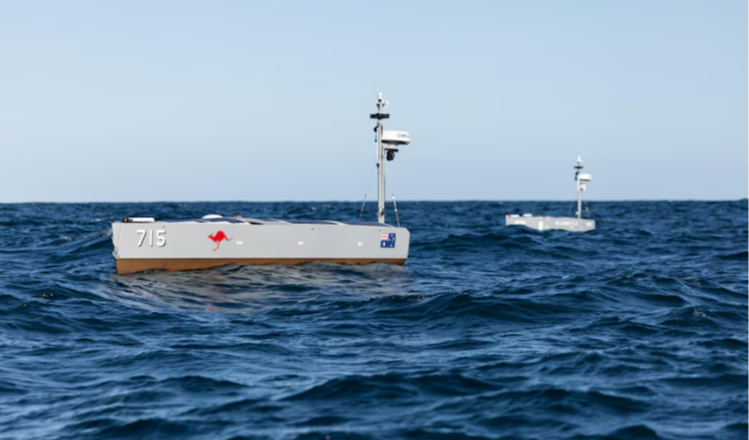
The unmanned vessels, known as Bluebottles, can remain at sea for up to six months and use artificial intelligence to identify potentially suspicious activity.
Australia will provide the technology and training under its $600 million Waqa Moana maritime security initiative, which aims to help Pacific Island countries respond to organised crime and other maritime threats.
Fiji's first Bluebottle drones are expected to arrive in 2027.
Fiji Faces Growing Drug Trafficking Threat
Fiji's location between the Americas and major drug markets in Australia and New Zealand has made it an important transit point for international trafficking networks.
Criminal organisations use fishing boats, yachts, commercial vessels and semi-submersible craft, commonly called narco-subs, to move illicit drugs through Pacific waters.
According to ABC News, at least 17 tonnes of illicit drugs, mainly cocaine, have been seized across the Pacific this year.
Fiji's Defence Minister Pio Tikoduadua said the country's greatest challenge is the enormous area its security agencies must monitor.
“Our biggest challenge is our waters are too big,” Tikoduadua said.
“We don't even have eyes on it, let alone have the capability to affect anything on it.”
Fiji's navy currently operates two major patrol vessels, RFNS Savenaca and RFNS Timo, both Australian-donated Guardian-class patrol boats.
The addition of unmanned surveillance vessels is expected to improve Fiji's ability to detect suspicious activity without requiring constant deployment of crewed patrol ships.
How the Bluebottle Drones Work
Developed by Australian company Ocius Technology, each Bluebottle is approximately 7.4 metres long and designed to operate autonomously for extended periods.
The vessels use a retractable solar sail to capture energy from sunlight and wind.
They also feature an underwater mechanism that converts the rocking motion of ocean waves into forward movement.
This combination allows them to remain at sea for months without relying on conventional fuel supplies.
The drones can carry surveillance equipment, including radar, infrared cameras and sonar systems.
Information collected by the vessels is transmitted via satellite to human operators.
Artificial intelligence helps analyse the data and identify vessels or activities that may require further investigation.
Ocius chief growth and market development officer Rob Brezniak explained that the drones are designed to support human decision-making rather than independently carry out enforcement operations.
“A government can then task an asset like a crewed vessel to approach,” Brezniak said.
He said the AI system uses “a combination of things” to help assess potentially suspicious activity.
Fiji to Control Its Own Maritime Surveillance
Tikoduadua confirmed that Fijian personnel will operate the Bluebottles and configure them to monitor vessels travelling through Fiji's waters.
The drones are expected to have a detection range of up to 30 nautical miles, or approximately 55.5 kilometres.
Information gathered by the vessels will be sent to the Vuvale Maritime Essential Services Centre, an Australian-funded security facility near Suva.
The centre brings together Fijian agencies, including the navy, police and fisheries authorities.
The minister said the technology would also allow Fiji to coordinate with international partners when suspicious vessels move beyond its maritime jurisdiction.
“If we need partner navies to come take a look, or a commercial vessel to take a look, it gives us that flexibility,” Tikoduadua said.
Fiji has not disclosed how many Bluebottles it will receive.
According to the defence minister, keeping that information confidential is intended to “keep drug dealers guessing”.
Australia Expands Maritime Security Support
Australia's Waqa Moana initiative includes maritime surveillance equipment, training and new programs involving the Australian Federal Police.
Australian Minister for Defence Industry and Pacific Island Affairs Pat Conroy said the technology could provide a significant advantage in detecting suspicious vessels.
“They are virtually impossible to detect unless you get very close to them,” Conroy said.
Earlier this month, Conroy said the Australian Navy was already operating 15 Bluebottles, with another 40 on order.
The Australian government's contract with Ocius for the additional 40 drones is valued at $176 million.
Conroy said Australia and Fiji needed to work closely together to disrupt international drug trafficking.
He emphasised the importance of “working together in a coordinated way in terms of intelligence gathering, intelligence sharing and interdiction”.
Trial Detects More Than 100 Suspected Illegal Fishing Vessels
Fiji has already seen the technology in action.
New Zealand recently deployed two Bluebottle drones to Fiji for a four-week joint maritime surveillance operation.
According to Associate Professor Jose Sousa-Santos, convenor of the Pacific Regional Security Hub at the University of Canterbury, officials reported that the drones detected more than 100 vessels suspected of illegal fishing.
Many of the vessels had reportedly switched off their electronic identification systems.
“They did exactly what they were supposed to do,” Sousa-Santos said.
“They were supported by the New Zealand Air Force and when they identified vessels that raised red flags, they were able to contact the RNZAF to provide further surveillance coverage.”
He said the technology could also disrupt drug trafficking networks if the drones were positioned along commonly used smuggling routes.
“It would force them to move to other trafficking routes which might not be as safe or profitable,” Sousa-Santos said.
The trial demonstrated how unmanned surveillance systems could support aircraft and patrol vessels in monitoring large areas of ocean.
Experts Warn Criminal Networks Could Adapt
While regional security experts have welcomed the technology, some warn that maritime drones will not eliminate drug trafficking.
Steve Symon, former chair of New Zealand's Ministerial Advisory Group on Transnational, Serious and Organised Crime, said the Bluebottles could become an important surveillance tool.
However, he warned that Pacific waters are so extensive that large numbers of drones may be needed to achieve meaningful coverage.
Symon also suggested that trafficking networks could change their methods in response to increased surveillance.
Criminal organisations might rely more heavily on commercial shipping or corruption within ports if smaller smuggling vessels become easier to detect.
He also warned that organised crime groups could eventually adopt similar autonomous technology.
“The reason why these [Bluebottle] drones are so good is because they are solar-powered and you can send them out for months at a time,” Symon said.
“But we'd be naive to think organised crime isn't going to be ready adopters of the same technology.”
Strengthening Security Across the Pacific
The planned deployment reflects growing cooperation between Australia and Pacific Island countries to address transnational crime.
Although the Bluebottles will primarily be used to detect drug trafficking and illegal fishing, their surveillance capabilities could also help authorities respond to other maritime security concerns.
Australian officials have not confirmed whether the drones deployed in Fiji will be used to monitor foreign military vessels.
Jennifer Parker, an adjunct professor of defence and security at the University of Western Australia, said the technology would largely strengthen an existing intelligence-sharing relationship between Fiji and Australia.
“Fiji and Australia have a significant defence partnership and we would already share significant information about what is happening in our maritime domains,” Parker said.
She added that using Bluebottles to collect maritime intelligence would likely build on cooperation already in place.
For Fiji, the immediate priority remains protecting its waters from criminal activity while making better use of limited naval resources.
The drones could provide longer surveillance coverage, earlier warnings and more opportunities for regional agencies to coordinate their responses.
As drug trafficking networks continue to exploit the Pacific's vast ocean routes, Fiji's adoption of autonomous maritime technology represents a new approach to strengthening regional security.
Original reporting: Kyle Evans, ABC News Australia.
Adapted and rewritten for Tungaru Press. Direct quotations are attributed to the individuals identified in the original reporting.
Tungaru Press | Local Voices, Global Stories.